1. Does the Supplier Have Electrical and Pneumatic Engineering Expertise?
Electro-pneumatic control panels require knowledge of both electrical control and pneumatic automation.
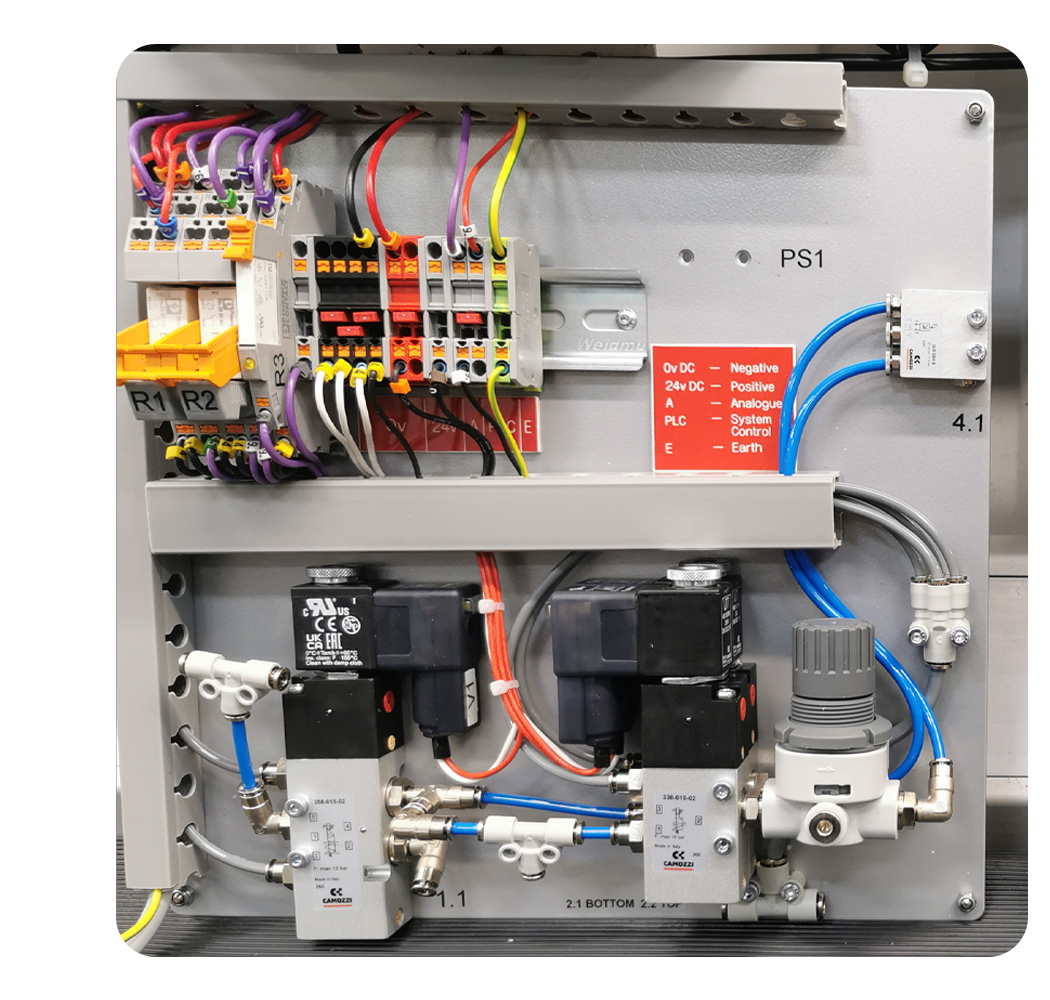
The supplier should understand areas such as:
- PLCs and control systems
- Sensors and feedback devices
- Electrical safety and circuit protection
- Industrial communication networks
This combined knowledge helps ensure that components are correctly specified and that the electrical and pneumatic sections operate as one coordinated system.
2. Does the Supplier Understand the Application Before Quoting?
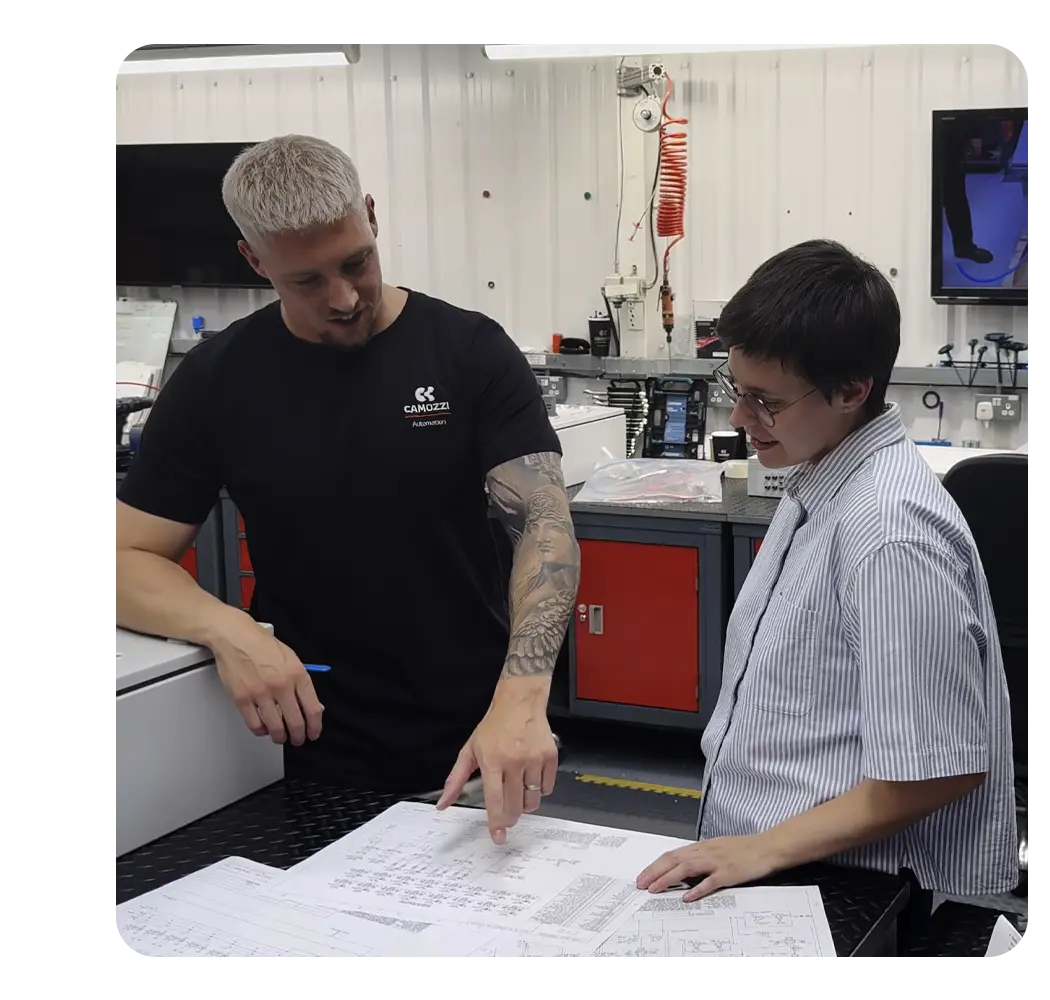
A capable supplier should ask detailed questions before recommending an electro-pneumatic control solution.
These may include:
- What does the machine need to do?
- How many actuators will be controlled?
- What cycle speed is required?
- What operating pressure is available?
- Which sensors and control signals are needed?
- Is a PLC or HMI required?
- What happens if electrical power or air pressure is lost?
- Will the system need to be expanded later?
The answers influence valve sizing, airflow requirements, electrical architecture, enclosure design and component selection.
A supplier that quotes without understanding the application may overlook important performance or safety requirements.
3. Can the Supplier Design a Bespoke Electro-Pneumatic Control Panel?
Most industrial automation projects have specific requirements.
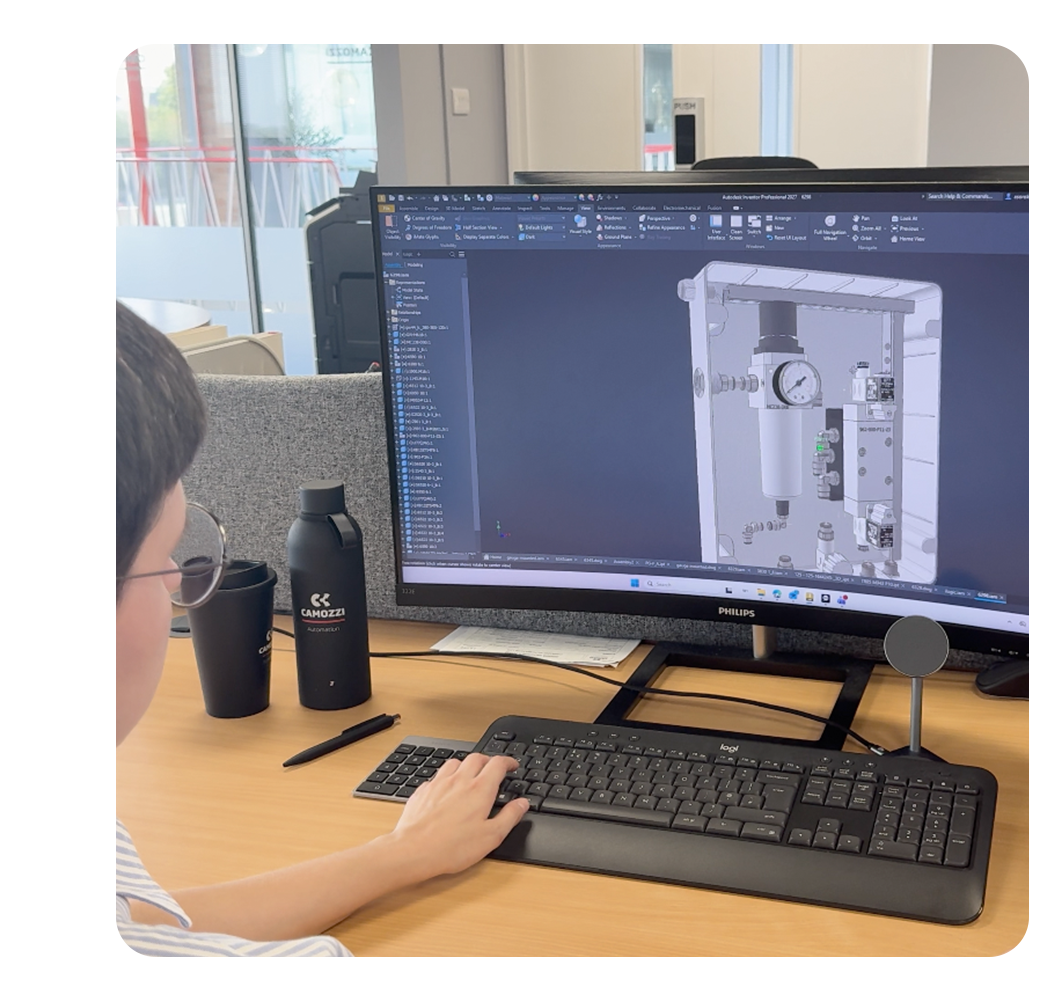
A suitable electro-pneumatic control panel supplier should be able to design around:
- Customer specifications
- Preferred component manufacturers
- PLC and communication standards
- Available installation space
- Environmental conditions
- Cable entry positions
- Maintenance access
- Future expansion requirements
The aim is to provide the simplest reliable solution for the application.
4. Can the Supplier Size Pneumatic Components Correctly?
Pneumatic components should be selected according to the required machine performance.
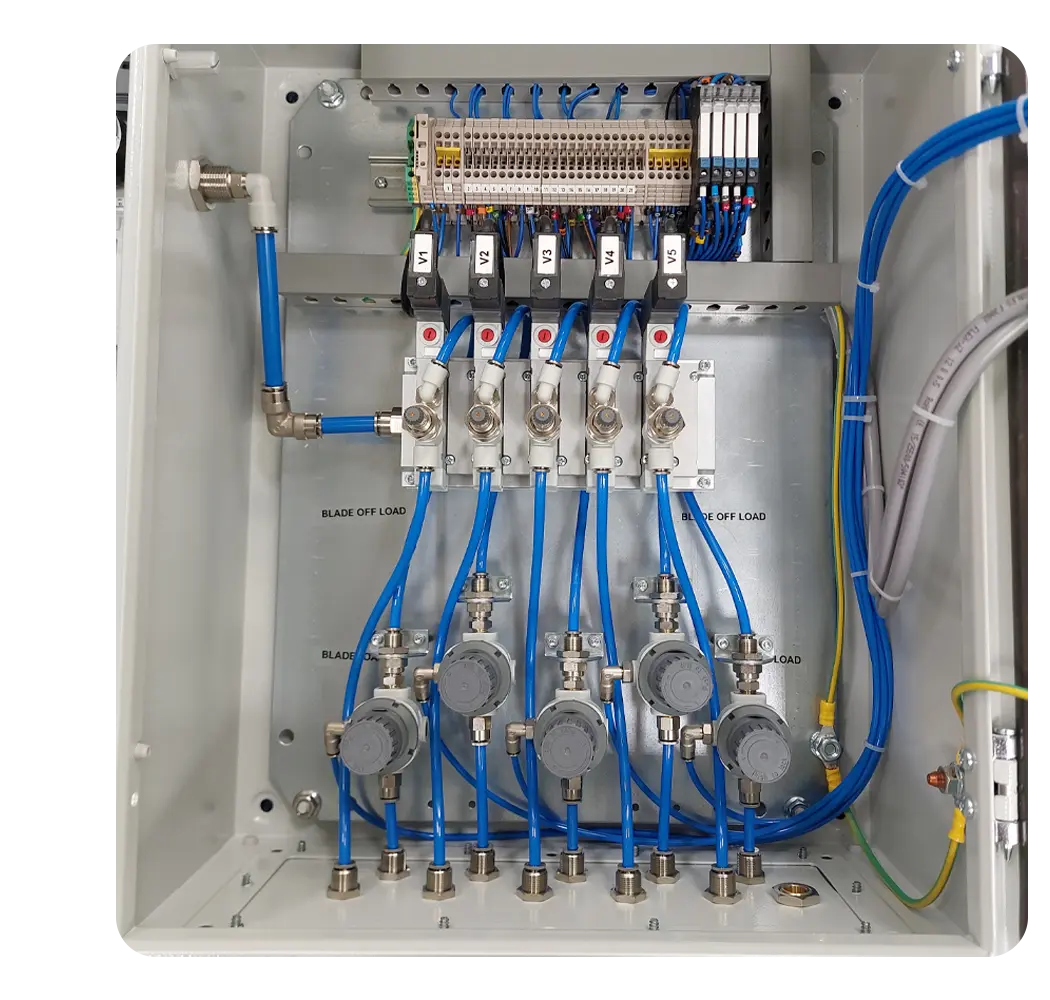
Important considerations include:
- Actuator size and stroke
- Required operating speed
- Valve flow capacity
- Tubing diameter and length
- Available air pressure
- Pressure regulation
- Air preparation
- Flow control
- Air consumption
For example, fitting a high flow valve will provide limited benefit if the tubing or fittings restrict the airflow. Equally, an undersized valve may prevent a cylinder from reaching the required speed.
5. Is the Electrical Control Architecture Suitable for the Machine?
The electrical design should match the complexity of the machine.
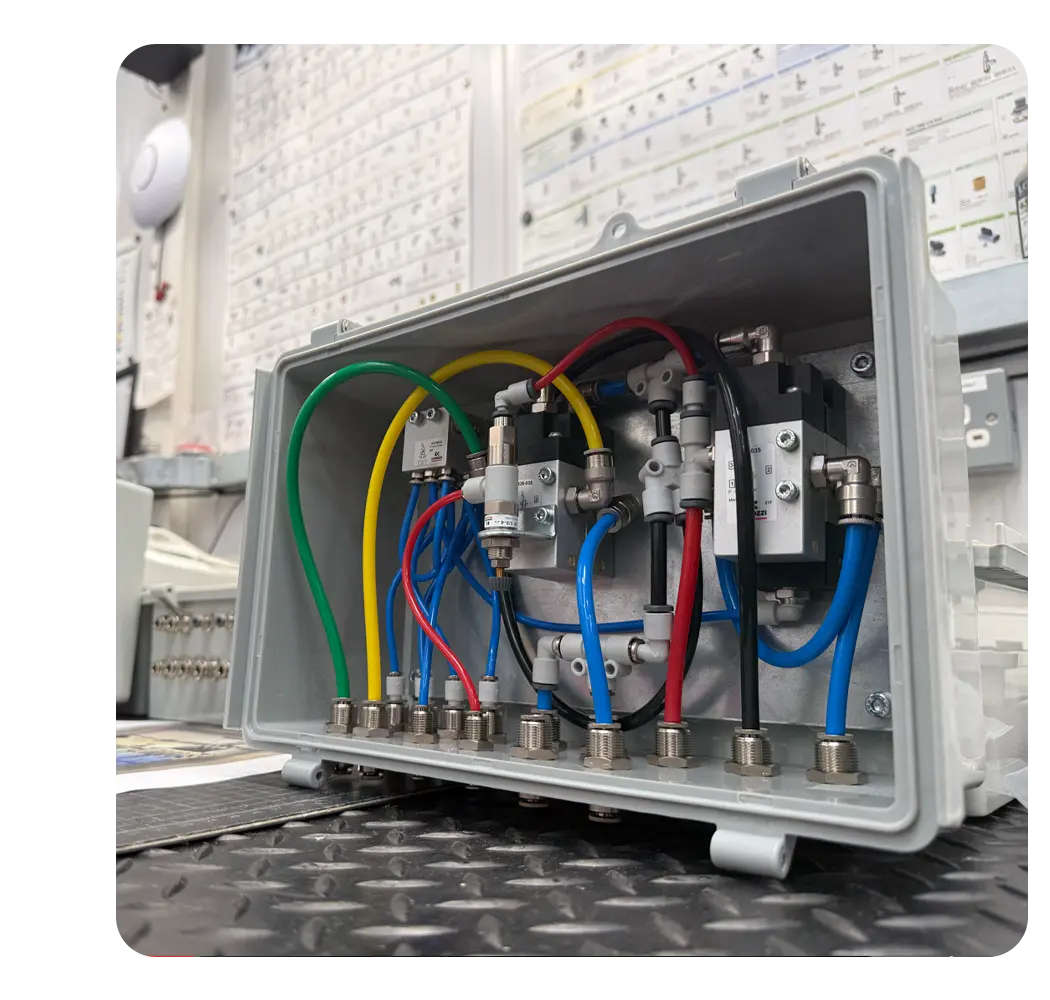
Depending on the application, the panel may include:
- PLCs and input/output modules
- Relays and contactors
- Power supplies
- Circuit protection
- Safety relays
- HMIs
- Network communication equipment
- Terminals and cable management
The design should also allow for clear fault-finding, safe isolation and practical maintenance.
Where future changes are likely, it may be sensible to include spare PLC capacity, additional terminals or space for extra components.
6. Is Safety Considered Across the Complete Control System?
Electrical and pneumatic safety should be considered from the start of the project.
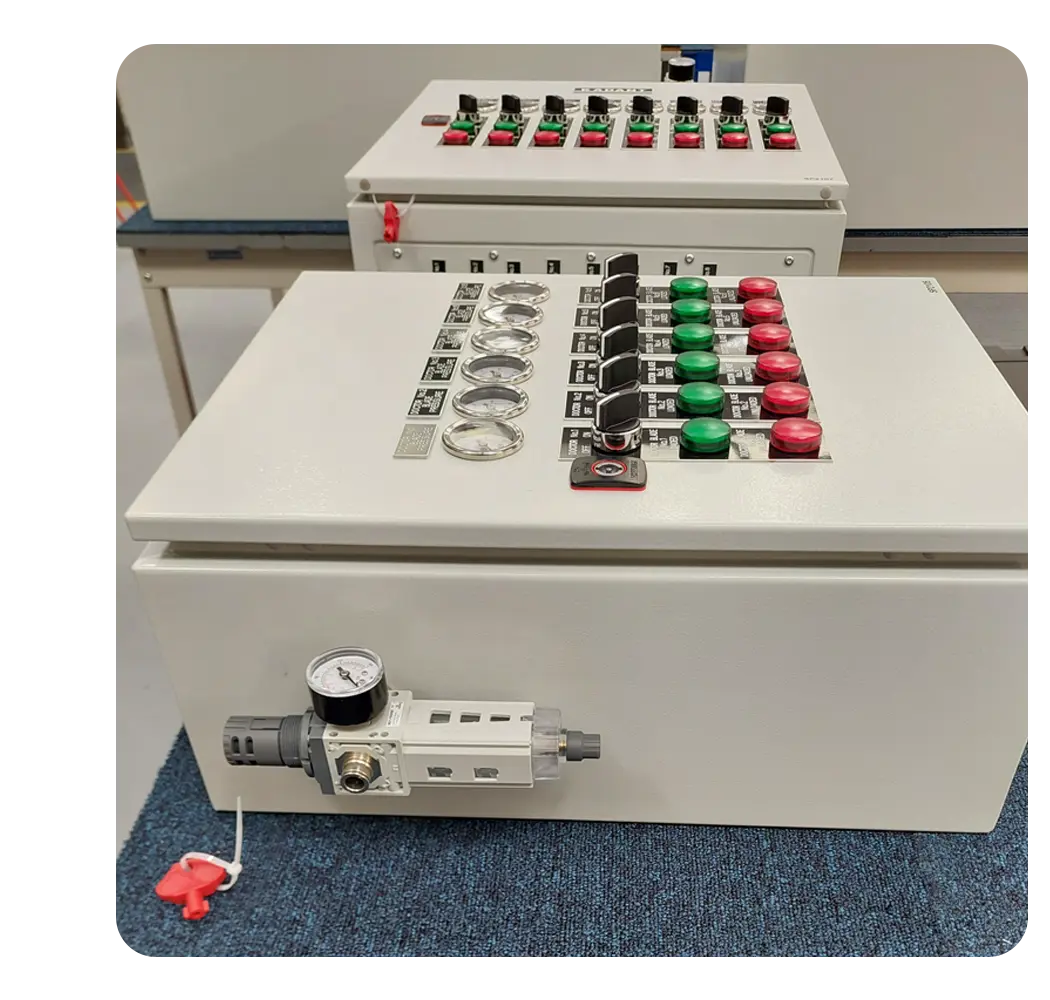
Depending on the machine risk assessment, the system may need to address:
- Emergency stopping
- Guard switches
- Electrical isolation
- Pneumatic isolation
- Safe exhaust of compressed air
- Prevention of unexpected movement
- Controlled restart after a fault
- Monitoring of safety devices
It is important to consider the complete safety function rather than relying on a single component.
The panel supplier should be able to work with the machine builder or responsible engineering team to support the required safety architecture.
7. Is the Control Panel Suitable for the Operating Environment?
The location of the control panel affects the enclosure and component selection.
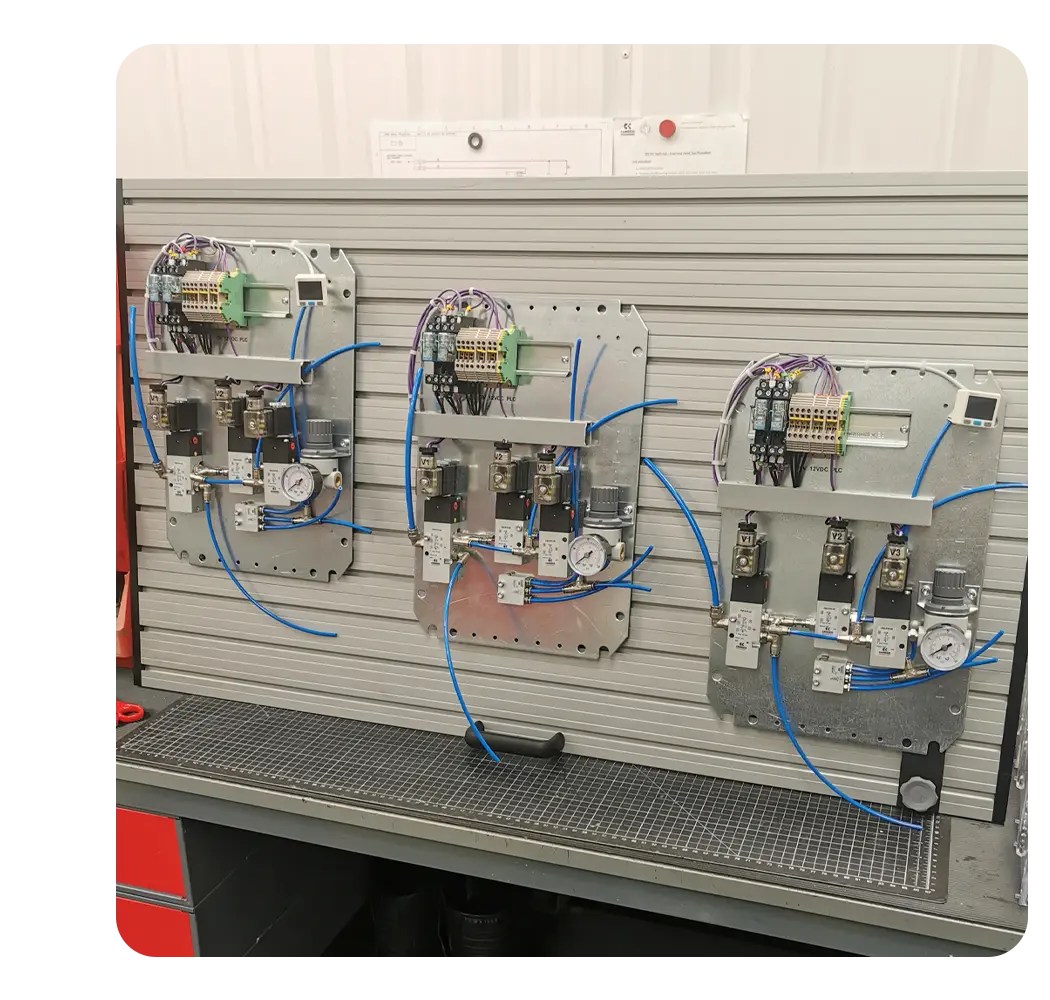
The supplier should consider:
- Dust
- Water and washdown
- Temperature
- Humidity
- Vibration
- Chemical exposure
- Indoor or outdoor installation
- Corrosive environments
- Hazardous area requirements
A panel designed for a clean factory environment may not be suitable for a wet, dusty or demanding process application.
8. What Testing, Documentation and Technical Support Are Included?
A well manufactured control panel should be tested before it reaches site. Accurate documentation is also important for installation and maintenance.
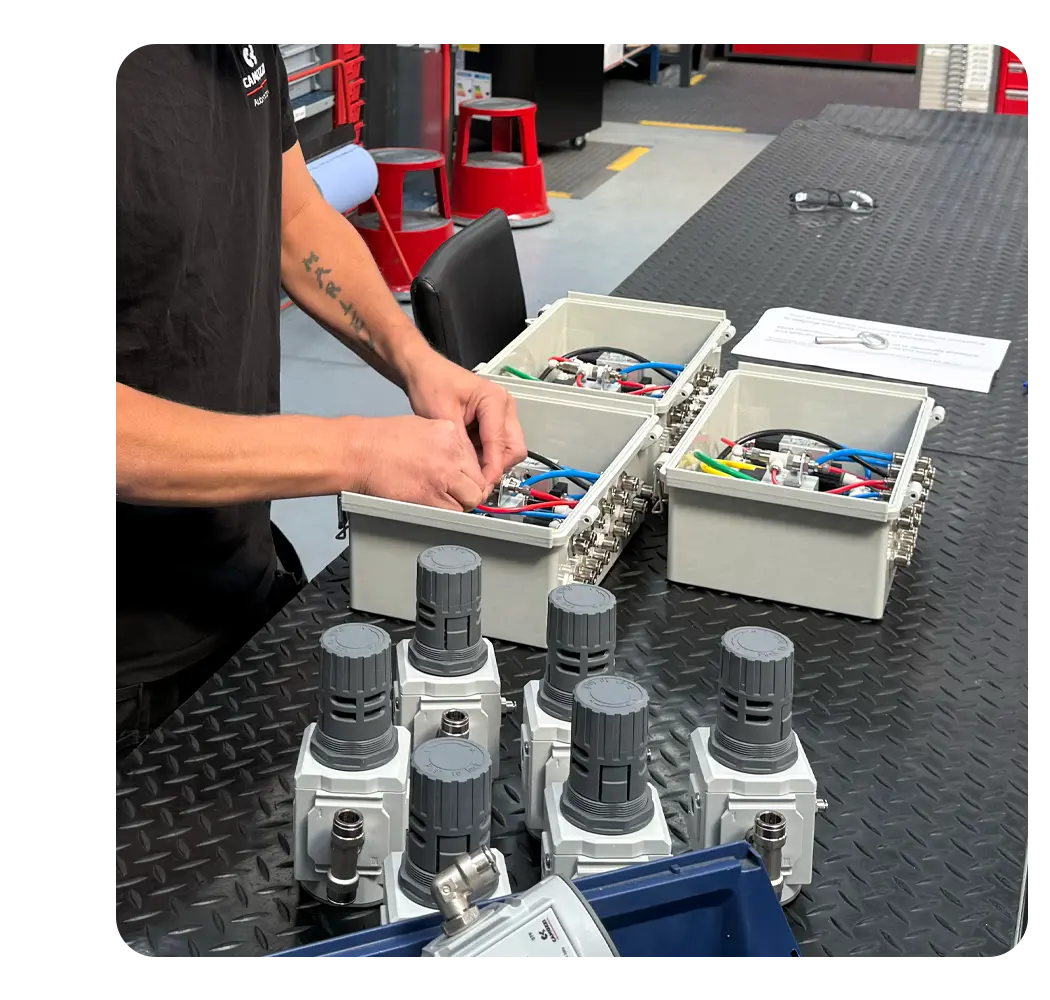
The agreed document package may include:
- Electrical schematics
- Pneumatic circuit diagrams
- Panel layout drawings
- Component lists
Final drawings should reflect the panel as it was actually manufactured.
The supplier’s role does not necessarily end when the panel is delivered. Support may also be required for:
- Replacement components
- Fault finding
- Machine upgrades
- Additional panels
- Changes to the production process
Questions to Ask a UK Control Panel Supplier Before Ordering
Before placing an order, ask:
- Do you provide electrical and pneumatic design support?
- Can you work from an initial concept?
- How do you size pneumatic valves and components?
- What testing will be completed?
- Which drawings and documents are included?
- Can you support installation and commissioning?
- Are replacement components readily available?
- Can the system be expanded in the future?
- What is included and excluded from the quotation?
Clear answers will make it easier to compare suppliers on more than price alone.
Why Choose Camozzi Automation UK for Electro-Pneumatic Control Panels?
Camozzi Automation UK supports OEMs, system integrators and industrial end users with the design and manufacture of custom electro-pneumatic control panels through our UK Automation Centre.
Our team combines electrical engineering capability with practical experience in pneumatic control systems and industrial automation.
Support can include:
- Application assessment
- Electrical and pneumatic design
- Component selection
- Control panel assembly
- Valve and valve island integration
- PLC and sensor integration
- Testing and documentation
- Commissioning assistance
- Ongoing technical support
By considering the electrical and pneumatic requirements together, we can help customers develop reliable, practical and maintainable automation solutions.